
Professora Pinoquinha
Professor Pinoquinha
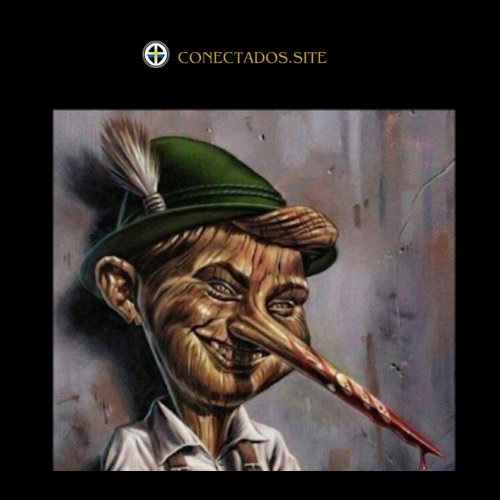
/>A história da professora Teresa é a história da entidade em que Teresa se transformou, a persona a que ela mesma deu o nome de “Professora Pinoquinha”. O nariz de madeira não é a metáfora perfeita de quem carrega uma falsidade que se tornou orgânica, parte do próprio corpo. Enquanto o boneco de Collodi suspirava por se tornar um menino de carne e osso, a nossa Pinoquinha realizou a proeza inversa: abandonou a carne para se degradar a coisa. E a coisa, ao contrário da carne, pode ser oca por dentro.
Isto aponta para uma moléstia espiritual. A aniquilação de Teresa em favor da Pinoquinha é a fuga da interioridade. O nome verdadeiro, que trazia consigo o peso da memória histórica e o fardo da autocrítica, foi atirado ao lixo. Esta metamorfose foi uma escolha — ainda que Teresa, imagino, já não soubesse dizer com precisão o momento exato em que a tomou.
Confesso que, ao escrever isto, me veio à memória uma sala de aula de há muitos anos — não sei bem dizer quantos, talvez duas décadas, talvez mais. Lembro do cheiro do giz, aquele pó fino que ficava nos dedos e na garganta, e de uma professora que falava com segurança. Na altura não soube nomear aquilo. Só sabia que algo ali soava suspeito.
O que poderia ensinar uma mulher que abdicou da própria alma? O seu magistério resumia-se a inocular nos alunos a impossibilidade do pensamento.
A Professora Pinoquinha é a criatura perfeitamente adaptada à sala de aula que foi degradada de templo do saber a um círculo de giz da ideologia.
Há algo de estranho nisto que me inquieta, e não sei se consigo explicar bem: por que razão a mentira, quando repetida o suficiente, deixa de doer a quem a profere?
Na tradição clássica, a autoridade do professor deriva da sua submissão prévia e reverencial à verdade objetiva.
O que acontece quando o ambiente acadêmico decide assassinar a verdade objetiva?
Se um aluno, movido por uma curiosidade autêntica, ousasse apontar uma contradição no discurso da Pinoquinha, a resposta nunca seria uma demonstração factual. A resposta seria o escândalo. A professora assumiria imediatamente a pose de paladina da justiça em fúria. A indignação moral, neste teatro, é uma tática de intimidação para paralisar o adversário e, simultaneamente, anestesiar a própria consciência da professora.
A sala de aula transformou-se, assim, num manicômio de certezas estéreis. A Pinoquinha sentia-se segura neste círculo de giz. Tinha o controle da narrativa e a garantia de que a realidade ficaria do lado de fora da porta.
Mas a realidade tem uma paciência infinita. Ela não se deixa banir. Fica à espreita, aguardando o momento exato para furar a bolha com a ponta de uma agulha. E essa agulha vem na forma da pergunta mais simples.
Chegamos ao momento fatídico. O ídolo de barro não suporta luz. E a luz que o desfaz irrompe de dentro, daquela dúvida fundamental que a própria Pinoquinha havia sepultado, daquela pergunta que ela mesma temia fazer. O seu castelo ideológico estava erguido, sim, mas sobre areia movediça, e todo castelo assim edificado carrega em si a negação da pergunta que o poderia derrubar. Basta que exista no mundo alguém capaz de a fazer para que o universo inteiro da Pinoquinha se torne precário.
Pedro era, pura e simplesmente, anônimo — e é justamente nesta anonimidade que está o caráter genuíno do seu gesto. O herói conhece o peso do seu desafio; o anônimo, pelo contrário... não, isto não está bem dito. O anônimo não ignora o peso. Apenas não o mede da mesma forma. O que ele tem é uma força que nasce exatamente dessa incompreensão ingênua das sombras à sua volta. A pergunta de Pedro não trazia consigo qualquer intenção subversiva. Era antes aquela honestidade pré-reflexiva que a ideologia jamais consegue domesticar. A pergunta exigia, pura e simplesmente, coerência — e a coerência é precisamente a virtude que o sistema da Pinoquinha não podia fornecer sem cometer suicídio.
Naquele espaço ideológico imperava uma lógica perversa: a verdade não era descoberta, era decretada, e bastava a posição na hierarquia para a instaurar. Nenhum tribunal da razão. Apenas hierarquia. Neste microcosmos, a pergunta genuína constitui um crime, porque expõe a nu a arbitrariedade de toda a construção.
A Pinoquinha, ao ouvir a pergunta, temeu a impossibilidade absoluta de dar a resposta. A pergunta exigia um alinhamento entre o dito e o vivido — algo que toda a sua estrutura mental fora desenhada para evitar. O que Pedro lhe serviu foi uma aporia socrática em estado puro, que revelava uma contradição existencial que ela passara a vida inteira a tentar não ver.
A reação imediata foi de indignação moral. Mas essa indignação traduzia pânico absoluto. Era a resposta visceral de quem sente o chão a fugir e traduz a angústia em raiva contra o mensageiro. O aluno foi instantaneamente rotulado para ser excluído do campo do discurso legítimo. Para a mente ideológica — e tomemos o termo no sentido que Marx, se não me falha a memória, lhe atribuiu; mas a idéia permanece — a realidade não deve ser conhecida, apenas interpretada segundo categorias pré-estabelecidas. A impertinência de Pedro consistiu em pressupor que a realidade precede a interpretação. Esta inversão ameaçava a base vital de toda a existência da professora.
O que transformou a pergunta num evento foi a sua forma, abrindo uma brecha onde o pensamento real e perigoso poderia, finalmente, acontecer.
Pedro, alheio a tudo isto, saiu da sala confuso, mantendo a sua legitimidade ingênua intacta. Jamais veria a semente germinar. Mas o fato é que a semente estava plantada, a fenda fora aberta, e o terremoto operando, já alterara de forma irreversível a estrutura subterrânea do mundo da Pinoquinha. A verdadeira subversão do logos acontecera: a simples recusa em aceitar que a pergunta já estava respondida antes de ser feita.
Confesso que aqui a crítica de um sistema ideológico já não basta: o que vem a seguir toca a estrutura da alma. A maioria apressa-se a catar os cacos para construir um novo abrigo ideológico, trocando os dogmas da véspera pelos da manhã seguinte. Mas há aqueles — e este é o drama final da nossa Teresa — que optam pelo caminho mais árduo: a ascese da destruição.
A verdadeira metanoia, a conversão profunda do intelecto, opera por subtração. A verdade começa com a destruição implacável da mentira. É um ato de violência contra as próprias ilusões, um despir doloroso daquela roupagem de prestígio acadêmico que servia apenas para camuflar o vazio.
Teresa, despida da sua persona de Professora Pinoquinha, viu-se subitamente confrontada com a miséria da sua própria inteligência — a miséria, insisto, não como figura de estilo, mas como a coisa em si, nua, sem a anestesia da retórica que a protegera durante anos. Foi aí, só aí, que a sua humanidade começou a ser restaurada. Não tenho a pretensão de explicar por que a queda dói tanto quanto dói. Ela aceitou a pobreza de espírito como a única postura epistemológica honesta perante a vastidão do real. Ou talvez a tenha aceitado simplesmente porque já não lhe restava outra escolha.
A verdade, meus caros, embora não nos faça livres, faz-nos, pelo menos, possíveis como sujeitos reais da nossa própria existência.
O que Teresa fez do seu cotidiano depois da queda do castelo — se continuou a lecionar com outra postura, se abandonou a academia corrompida — é secundário. O que interessa é a assunção da verdade.
A constatação de que ainda é possível sair da caverna descrita por Platão (Livro VII da República, salvo erro — não tenho o volume aqui comigo para conferir). Para deixar de olhar para as sombras projetadas na parede como se fossem a substância do mundo. E essa saída não garante felicidade alguma; é apenas a única forma de autenticidade que resta ao ser humano.
Teresa não foi um gênio nem uma figura excepcional. Foi alguém que teve a suprema coragem de voltar a ser comum: a coragem de admitir a sua comum falibilidade, a sua comum ignorância perante o mistério do ser, a sua comum necessidade de recomeçar do zero. E é nessa coragem do homem comum que talvez resida o único heroísmo intelectual que ainda faz sentido no nosso tempo. Não sei se Teresa voltaria a dar aulas. Não sei, sequer, se o giz ainda lhe cheira a mentira ou se já lhe cheira, simplesmente, a giz.
José Rodolfo G. H. de Almeida é escritor e editor do site www.conectados.site
Apoie o Site
Se encontrou valor neste artigo, considere apoiar o site. Optamos por não exibir anúncios para preservar sua experiência de leitura. Agradecemos sinceramente por fazer parte do suporte independente que torna isso possível!
Entre em Contato
Para dúvidas, sugestões ou parcerias, envie um e-mail para contato@conectados.site
____________________
The Story of Professor Teresa
The story of Professor Teresa is the story of the entity Teresa turned into, the persona she herself named "Professor Pinocchia." The wooden nose is not the perfect metaphor for someone who carries a falsehood that has become organic, part of the body itself. While Collodi's puppet longed to become a boy of flesh and bone, our Pinocchia achieved the inverse feat: she abandoned flesh to degrade herself into a thing. And a thing, unlike flesh, can be hollow inside.
This points to a spiritual malady. Teresa's annihilation in favor of Pinocchia is the flight from interiority. Her true name, which carried the weight of historical memory and the burden of self-criticism, was thrown in the trash. This metamorphosis was a choice — though Teresa, I imagine, could no longer say with precision the exact moment she made it.
I confess that, writing this, a classroom from many years ago came back to me — I couldn't say exactly how many, perhaps two decades, perhaps more. I remember the smell of chalk, that fine dust that clung to fingers and throat, and a teacher who spoke with confidence. At the time I couldn't name it. I only knew that something there sounded suspect.
What could a woman who had abdicated her own soul possibly teach? Her teaching amounted to inoculating students against the very possibility of thought.
Professor Pinocchia is the creature perfectly adapted to the classroom that had been degraded from a temple of knowledge to a chalk circle of ideology.
There is something strange in this that unsettles me, and I'm not sure I can explain it well: why does a lie, repeated enough times, stop hurting the one who tells it?
In the classical tradition, a teacher's authority derives from their prior, reverential submission to objective truth.
What happens when the academic environment decides to murder objective truth?
If a student, moved by genuine curiosity, dared to point out a contradiction in Pinocchia's discourse, the response would never be a factual demonstration. The response would be scandal. The professor would immediately strike the pose of a furious champion of justice. Moral outrage, in this theater, is a tactic of intimidation meant to paralyze the opponent and, at the same time, anesthetize the professor's own conscience.
The classroom thus became an asylum of sterile certainties. Pinocchia felt safe within this chalk circle. She held control of the narrative and the assurance that reality would stay outside the door.
But reality has infinite patience. It cannot be banished. It waits, biding its time for the exact moment to prick the bubble with the point of a needle. And that needle comes in the form of the simplest question.
We arrive at the fateful moment. The clay idol cannot withstand light. And the light that undoes it bursts from within, from that fundamental doubt Pinocchia herself had buried, from that question she herself feared to ask. Her ideological castle stood, yes, but on shifting sand, and every castle built that way carries within it the denial of the question that could bring it down. It takes only one person in the world capable of asking it for Pinocchia's entire universe to become precarious.
Pedro was, purely and simply, a nobody — and it is precisely in this anonymity that the genuine character of his gesture lies. The hero knows the weight of his challenge; the nobody, on the contrary... no, that's not quite right. The nobody does not ignore the weight. He simply doesn't measure it the same way. What he has is a strength born exactly from that naive incomprehension of the shadows around him. Pedro's question carried no subversive intent whatsoever. It was, rather, that pre-reflective honesty which ideology can never tame. The question demanded, purely and simply, coherence — and coherence is precisely the virtue that Pinocchia's system could not supply without committing suicide.
In that ideological space a perverse logic reigned: truth was not discovered, it was decreed, and one's position in the hierarchy was enough to establish it. No tribunal of reason. Only hierarchy. In this microcosm, a genuine question constitutes a crime, because it exposes the arbitrariness of the whole construction.
Pinocchia, on hearing the question, feared the absolute impossibility of answering it. The question demanded an alignment between what was said and what was lived — something her entire mental structure had been built to avoid. What Pedro handed her was a Socratic aporia in its purest form, one that revealed an existential contradiction she had spent her whole life trying not to see.
The immediate reaction was moral outrage. But that outrage translated pure panic. It was the visceral response of someone who feels the ground give way and turns the anguish into rage against the messenger. The student was instantly branded to be excluded from the field of legitimate discourse. For the ideological mind — and let's take the term in the sense that Marx, if memory serves, gave it; but the idea remains — reality is not meant to be known, only interpreted according to pre-established categories. Pedro's impertinence consisted in presupposing that reality precedes interpretation. This inversion threatened the vital foundation of the professor's entire existence.
What turned the question into an event was its form, opening a breach where real, dangerous thought could finally happen.
Pedro, oblivious to all this, left the classroom confused, his naive legitimacy still intact. He would never see the seed germinate. But the fact is that the seed had been planted, the crack had been opened, and the earthquake, already at work, had irreversibly altered the subterranean structure of Pinocchia's world. The true subversion of logos had occurred: the simple refusal to accept that the question had already been answered before it was asked.
I confess that here criticizing an ideological system is no longer enough: what follows touches the very structure of the soul. Most people rush to gather the shards to build a new ideological shelter, trading yesterday's dogmas for tomorrow's. But there are those — and this is the final drama of our Teresa — who choose the harder path: the asceticism of destruction.
True metanoia, the profound conversion of the intellect, works by subtraction. Truth begins with the implacable destruction of the lie. It is an act of violence against one's own illusions, a painful undressing of that garment of academic prestige that served only to camouflage the void.
Teresa, stripped of her persona as Professor Pinocchia, suddenly found herself confronted with the poverty of her own intelligence — poverty, I insist, not as a figure of speech, but as the thing itself, naked, without the anesthesia of the rhetoric that had protected her for years. It was there, only there, that her humanity began to be restored. I make no claim to explain why the fall hurts as much as it does. She accepted poverty of spirit as the only honest epistemological stance before the vastness of the real. Or perhaps she accepted it simply because she had no other choice left.
Truth, my friends, though it does not set us free, at least makes us possible — makes us real subjects of our own existence.
What Teresa did with her daily life after the castle fell — whether she kept teaching with a different posture, whether she left the corrupted academy — is secondary. What matters is the assumption of truth.
The realization that it is still possible to leave the cave described by Plato (Book VII of the Republic, if I'm not mistaken — I don't have the volume with me to check). To stop looking at the shadows cast on the wall as if they were the substance of the world. And that exit guarantees no happiness at all; it is merely the only form of authenticity left to a human being.
Teresa was no genius, no exceptional figure. She was someone who had the supreme courage to become ordinary again: the courage to admit her ordinary fallibility, her ordinary ignorance before the mystery of being, her ordinary need to start again from zero. And it is in that courage of the ordinary person that perhaps the only intellectual heroism that still makes sense in our time resides. I don't know if Teresa would teach again. I don't even know if chalk still smells to her like a lie, or if, by now, it simply smells like chalk.
José Rodolfo G. H. Almeida is a writer and editor of the website www.conectados.site
Support the website
If you found value in this article, please consider supporting the site. We have chosen not to display ads to preserve your reading experience. We sincerely thank you for being part of the independent support that makes this possible!
Get in Touch
For questions, suggestions or partnerships, send an email to contato@conectados.site